Steinbeck Vineyards & Winery
Our History
1 Family – 7 Generations – 142 Years
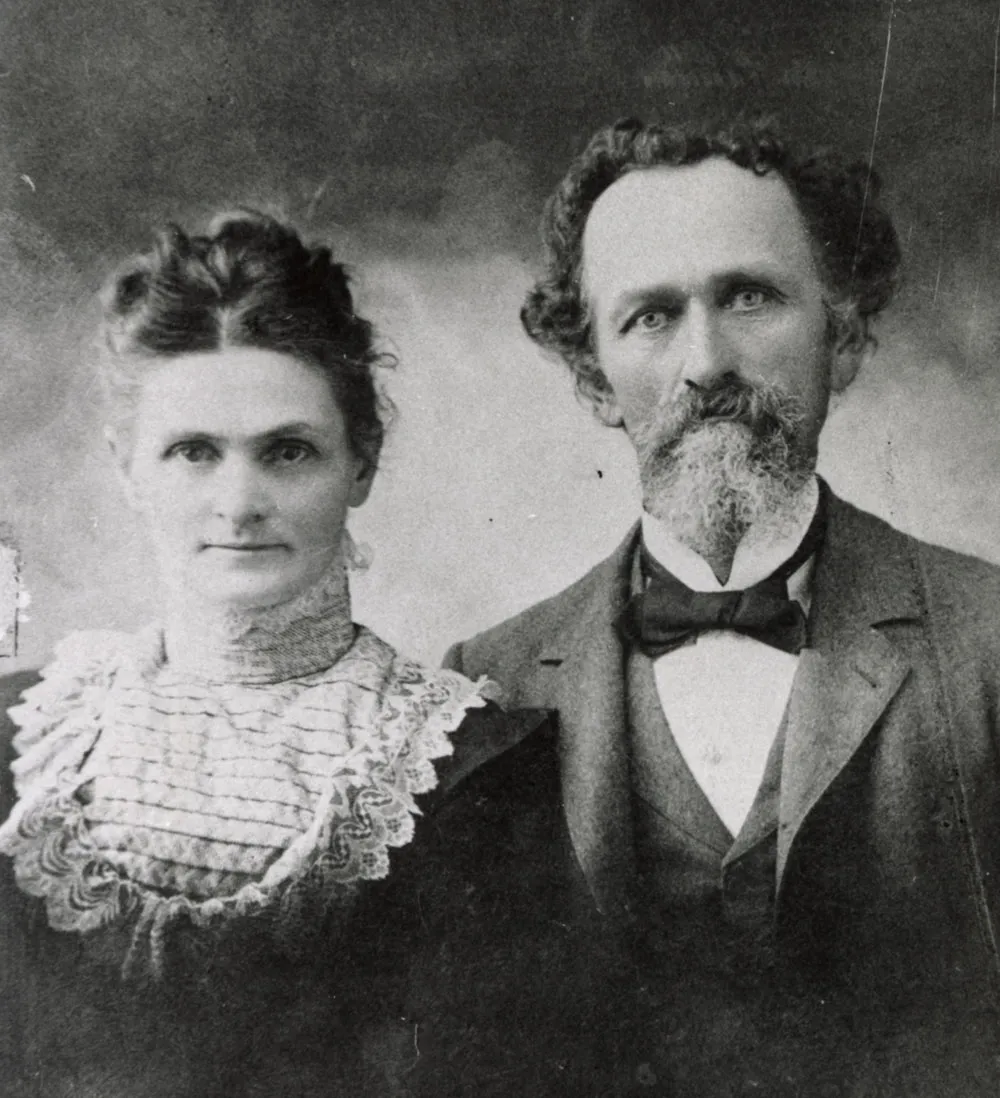
William and Barbara Amelia (Matthis) Ernst — The First Generation
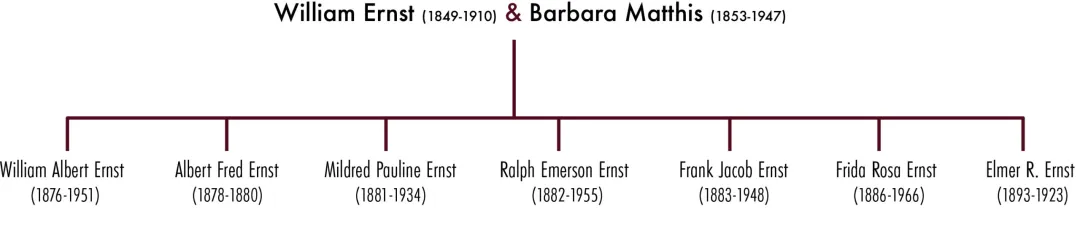
William and Barbara Ernst were the first of seven generations to settle in the Geneseo area east of Paso Robles, California to farm grapes and make award-winning wines. They traveled by train from Illinois and arrived in Paso Robles in December 1884. John Ernst, William’s twin brother, stayed in Illinois to sell the family properties and possessions; he arrived with his family the following year. William and John, worked with the UC Experiment Station of the South Coast Range to determine the crops that could be successfully farmed based on variety, soil, rainfall, and climate in the area from Geneseo to Creston. William provided valuable research and data on each farmer in this area from 1885 to 1902, preserving valuable wine history. William and Barbara had five sons and two daughters. All lived long and healthy lives except the second born, who died in infancy. The eldest, Will, became a composer and well-known musician. Frank, Ralph Emerson, and Elmer farmed in the Creston area, and their daughters Mildred Pauline and Frieda Rosa married and continued to live in the area. Read more about William Ernst and his family in the Ernst Family Legend.
Frank and Rosie (Paulus) Ernst — The Second Generation
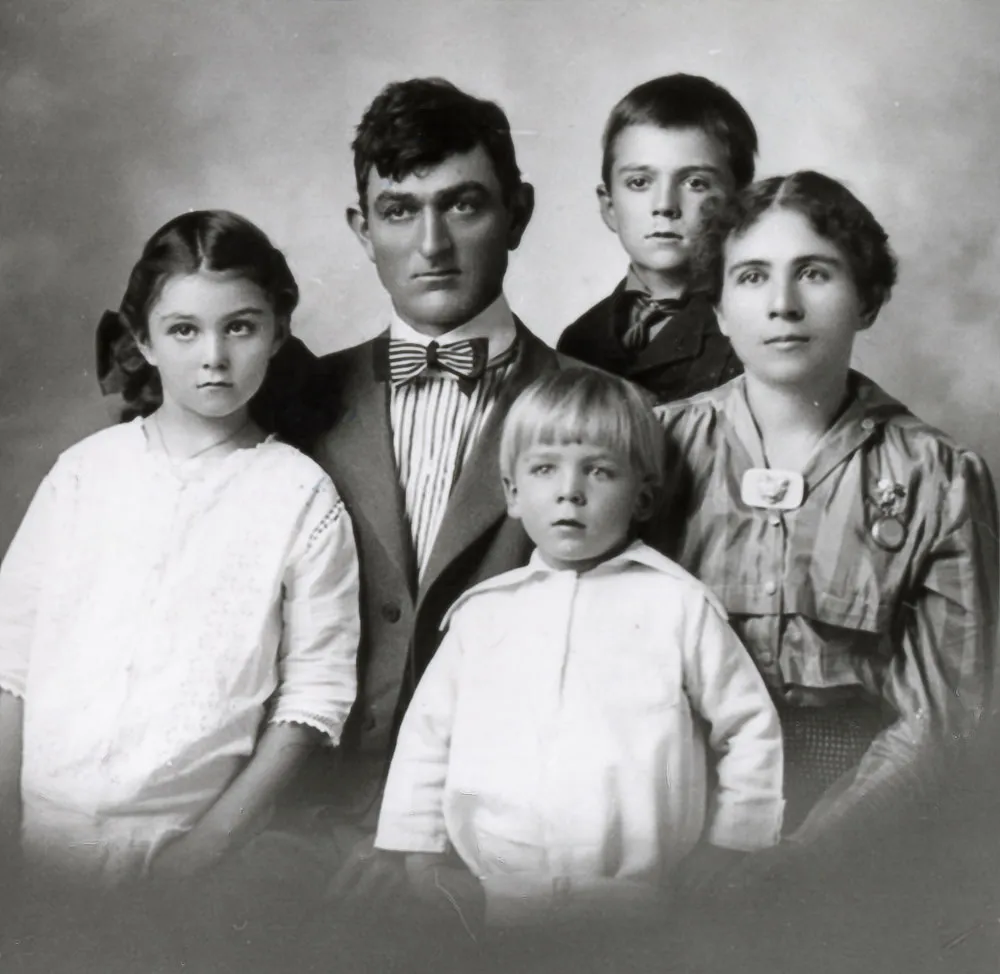
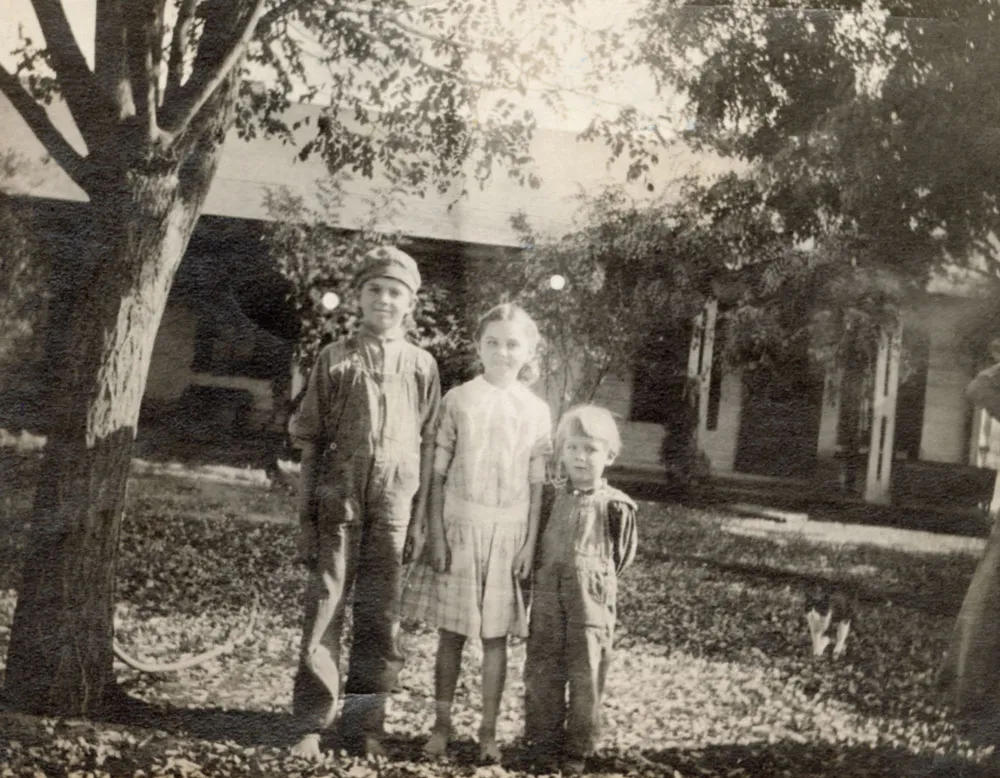
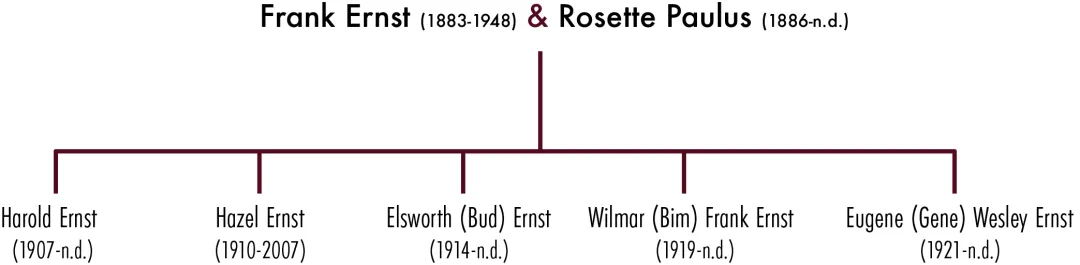
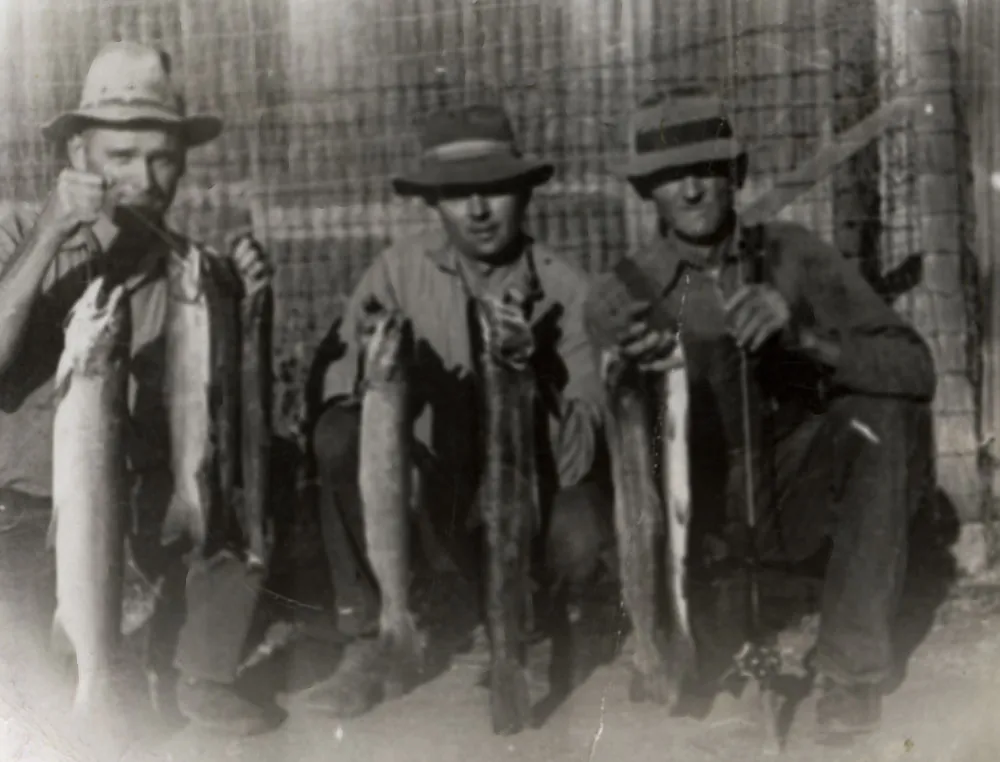
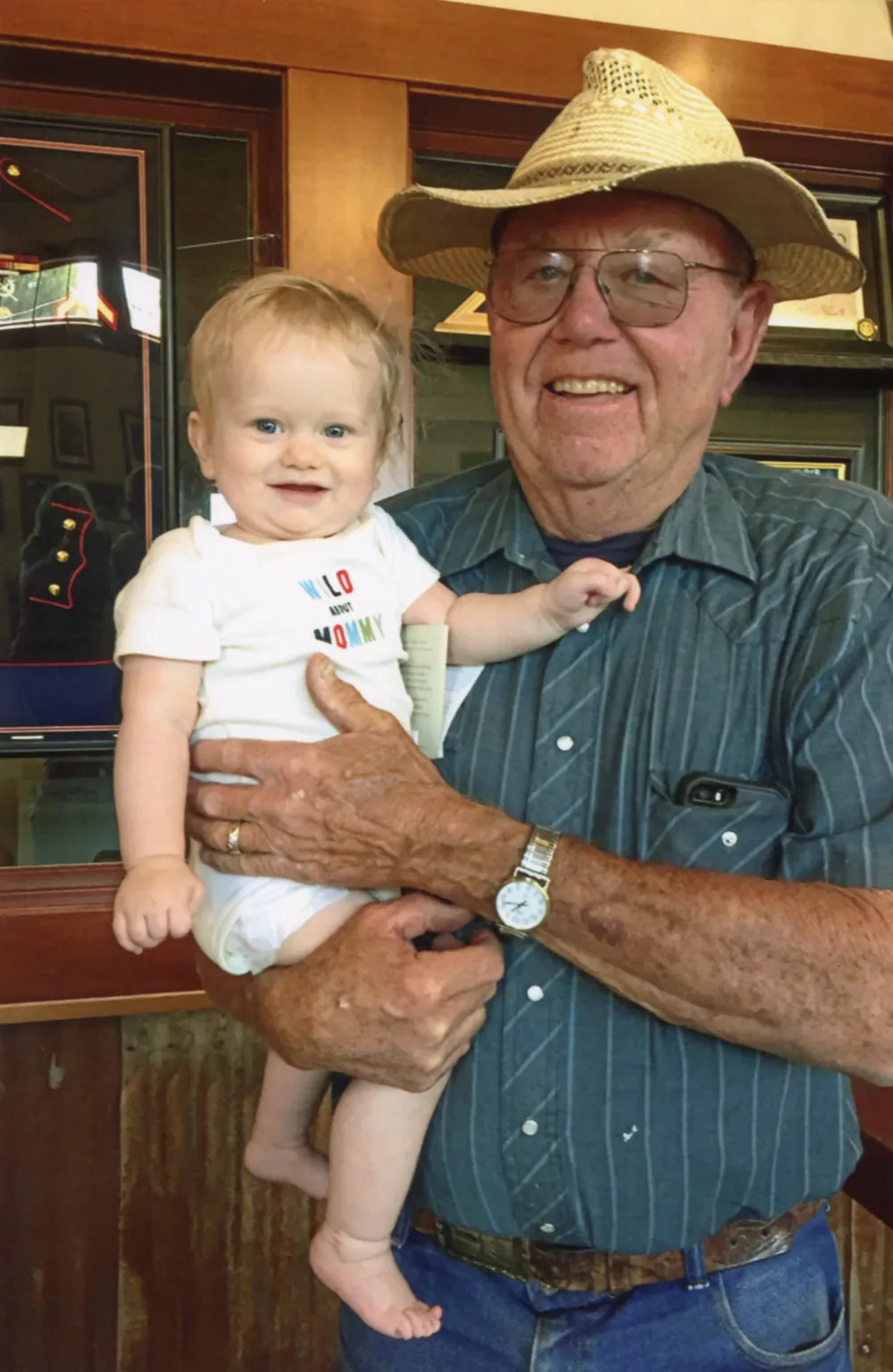
Frank Ernst was born in Geneseo, Illinois, to William and Barbara Ernst on April 27, 1883. He was 18 months old when the family moved to Paso Robles. He attended the Geneseo School until he was 13 or 14 years old. Frank was described as a boy “full of the dickens.” He was a jokester and trickster, always teasing his friends and siblings. A favorite story describes Frank and his brother Ralph at work, given the task of removing a large limb from the tall tree located on a high bank next to the Huer Huero River. They decided to tie the limb to their horse, Tom, and have him pull the limb off the tree to save time and effort. However, the physics of the moment backfired. As Tom was chased forward toward the cliff, instead of the limb breaking off as planned, Tom was suddenly suspended high in the air over the river. It must have been quite a sight to see. However, the story of Tom’s rescue has been lost in the laughter. Frank married Rosette (Rosie) Louise Paulus in January of 1907. He spotted her at the July Fourth Picnic on the Pepmiller Farm in 1901. He sat down next to her and put his arm around the back of her seat. She was 15 and he was 18. They were married 6 years later. They were very hard workers, raising hogs and farming grain. They owned several farms before buying their 300-acre property on Union Road in 1921, which is now the home ranch of four generations of Steinbecks, the vineyards and winery. Frank and Rosie’s first-born was a son, Harold, born in November of 1907. Their daughter, Hazel, was born in November of 1910; Hazel married George Steinbeck and became the mother of Howie Steinbeck. From 1915 to 1923, Frank’s crops were large, and the price of grain was high. They prospered and three more sons were born: Elsworth (Bud) in 1914, Wilmar Frank in 1919, and Eugene (Gene) Wesley in 1921. Frank Ernst realized that farming was about to change forever with mechanization. In 1920 he purchased the first tractor in the area; the model was known as the Yuba. All four brothers grew up to be skilled farmers in the Creston area. The Ernst family of grain farmers sold all their horses and mules to raise the cash for a down payment on a Cat 35 diesel. This Cat 35 was still in operation in 1967 serving the third generation of Ernst, Ellsworth and son. Frank grew barley, oats, wheat, and ran cattle on his land. Frank sold his crops through the Farm Alliance in Paso Robles warehouse. He was the first to own a tractor in the area, the Yuba, purchased in 1920. Frank Ernst was the first to sell bulk grain in 1928, 14 years before anyone else in the area; five tons of grain were boxed on a truck. He was always ready to engage with the latest innovations in farming. Frank served as the Chairman of the Farm Bureau and was highly respected for his leadership. Although each brother owned his own farm, they formed a partnership known as the Ernst Brothers to produce, market and distribute their products efficiently after World War II. It was a successful business model. On a personal level — Frank loved to hunt and fish. When the temperature rose to over 100 degrees, Frank would go to Morro Bay to fish on the land bridge between the Sand Spit and the Morro Rock. He taught Howie to fish and he remembers that first catch in Willow Creek. Frank loved his dogs and there are many stories about them among the family legends. Frank remained a prankster all his life; Howie Steinbeck remembers fondly when his grandpa offered him a dollar to bite off the head of a frog. Frank and his grandson, Howie, were inseparable. Howie credits his love for and inspiration to farm to his grandfather.
George and Hazel (Ernst) Steinbeck — The Third Generation
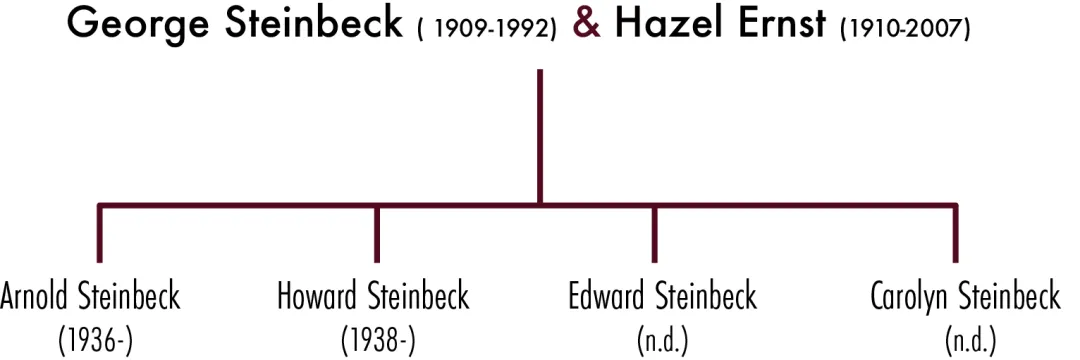
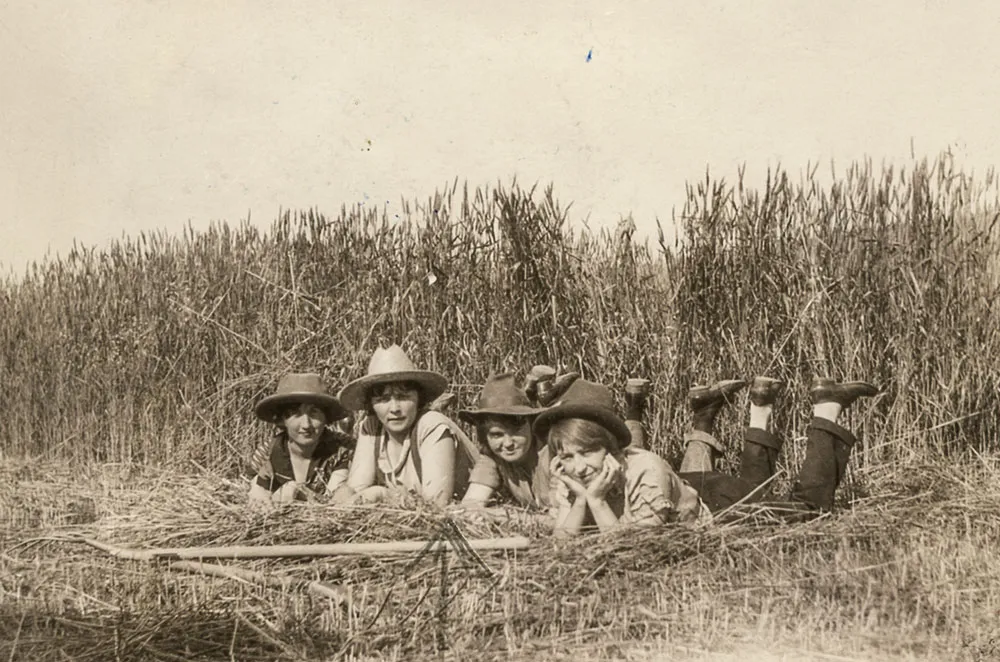
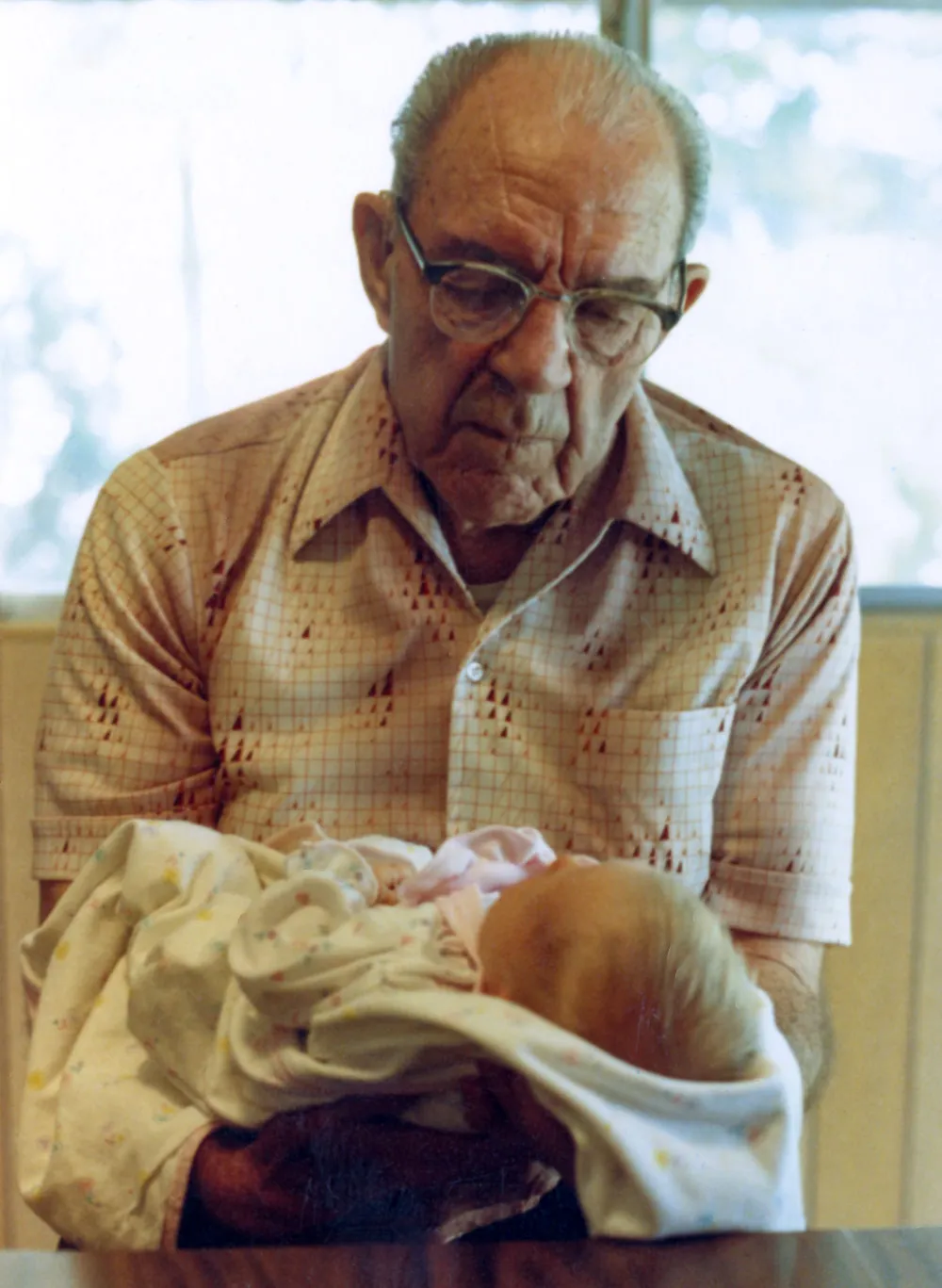
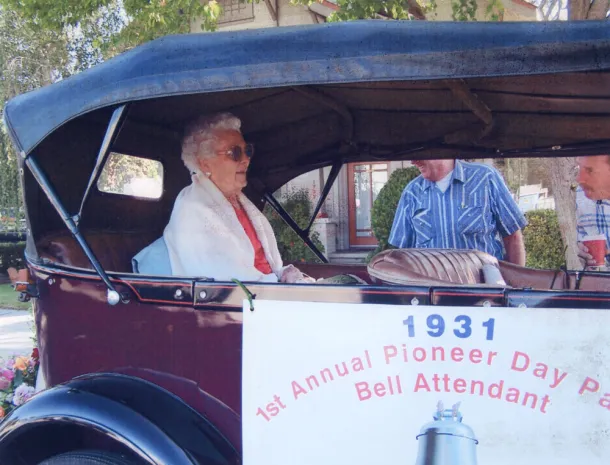
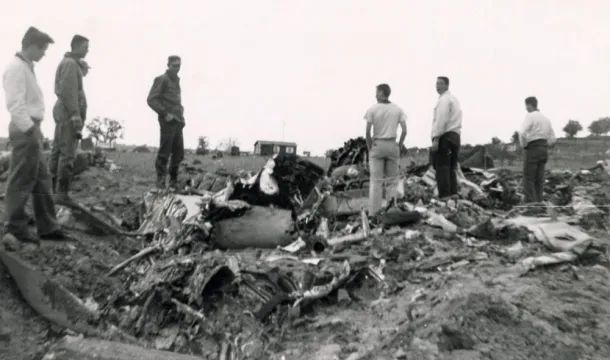
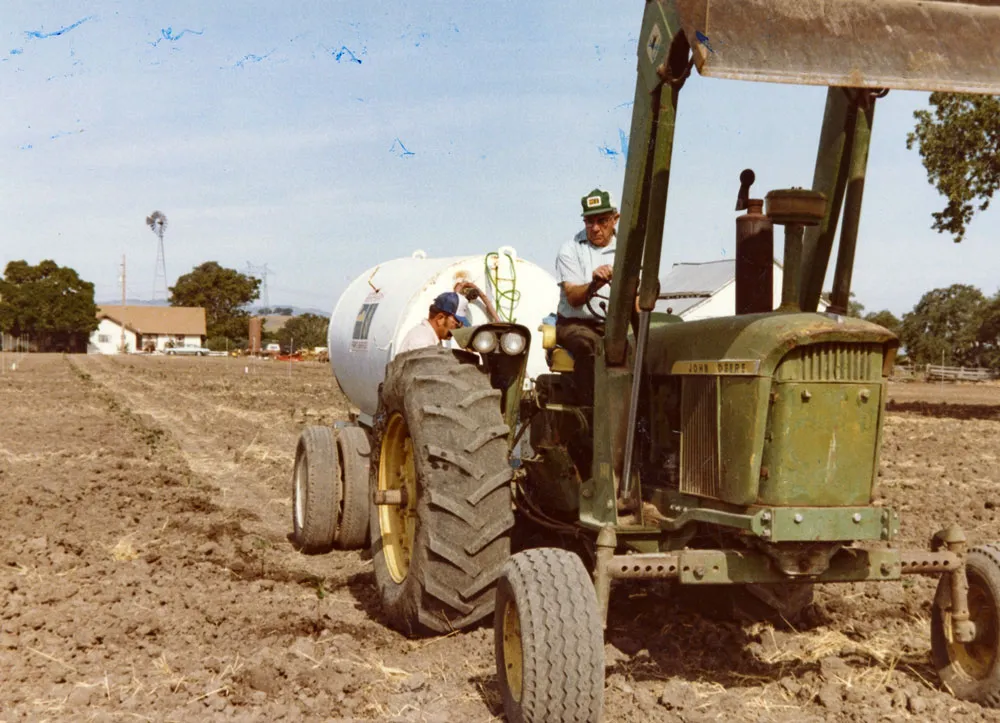
Hazel Ernst married George Steinbeck on July 15, 1934. Hazel was the only daughter among the five children of Frank and Rosie Ernst. Hazel attended local rural schools, graduated from Paso Robles Union High School, and attended California Polytechnic College. She was one of the first women to do so. Hazel and George moved to Santa Barbara soon after their wedding; George started his career in the ministry at the Emmanuel Lutheran Church. They had four children: Arnold, Howie, Edward, and Carolyn. George was commissioned as a chaplain in the U. S. Army in August 1942. Hazel moved with their children to Paso Robles to rejoin her family on the Ernst/Steinbeck ranch. After World War II, the couple and their children were reunited. They moved to Los Angeles in 1945 where George directed the Southern California Lutheran Hour radio program. In July 1948, the family returned to Paso Robles. Frank Ernst had died unexpectedly and George and Hazel moved to the Ernst/Steinbeck ranch. George found a new job with the new California Youth Authority facility. For the next eight years, the family farmed the ranch. In 1956 a Military B-26 Marauder plane crashed on the Ernst/Steinbeck ranch just 200 feet from the family home. George and Hazel watched the plane hit the ground and explode. The crew had launched their parachutes, jumped from the plane and hit the ground; Hazel and George rushed to save them. The captain was treated in the ranch house and kept alive until medics arrived. The location of the incident is marked by an American flag which flies in the vineyard. Cindy named one of the Steinbeck red blends “The Crash.” Pieces of the wreckage are on display in the tasting room. In 1957 George and Hazel were summoned by the ministry to become new pastorates at St. James Lutheran Church in Newman, California, and later at Zion Lutheran Church in Terra Bella, California. In 1968 George became the first full-time Chaplain for the Good Shepherd Lutheran Home of the West in Terra Bella. George had a near-fatal auto accident in 1973 and was forced to retire from the Ministry in 1974. Hazel and George decided to move back to the Ernst/Steinbeck ranch. They built a home on the land they had once farmed and lived there until 1988 surrounded by family. George enjoyed driving a tractor with Howie in 1982 when Howie planted his first vineyard. In 1988 they moved to a retirement home in Solvang. George died in 1992 and Hazel on September 21, 2007. Hazel had the honor of reliving her 1931 role as one of first the Pioneer Day Belle Attendants in 2005. She rode in the 2005 Pioneer Parade on its 75th Anniversary.
Howie and Bev Steinbeck — The Fourth Generation
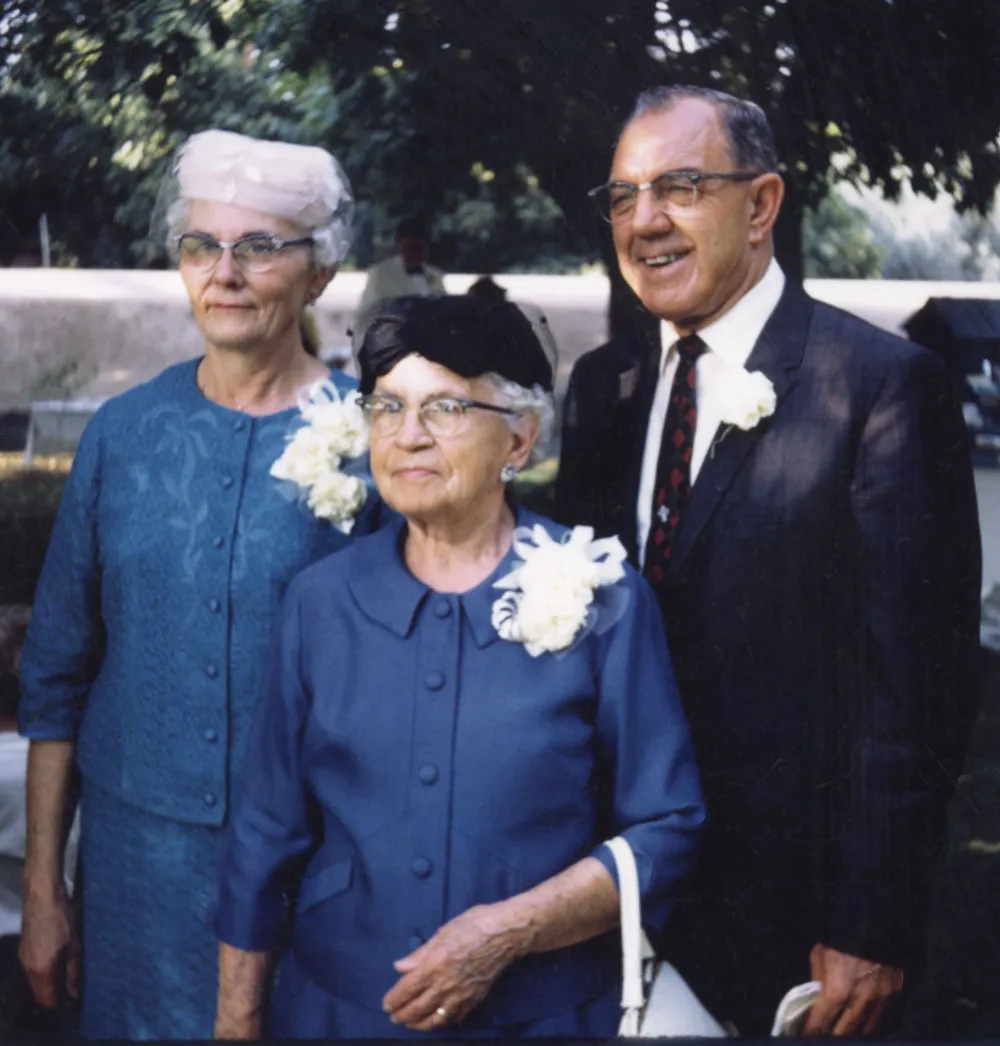
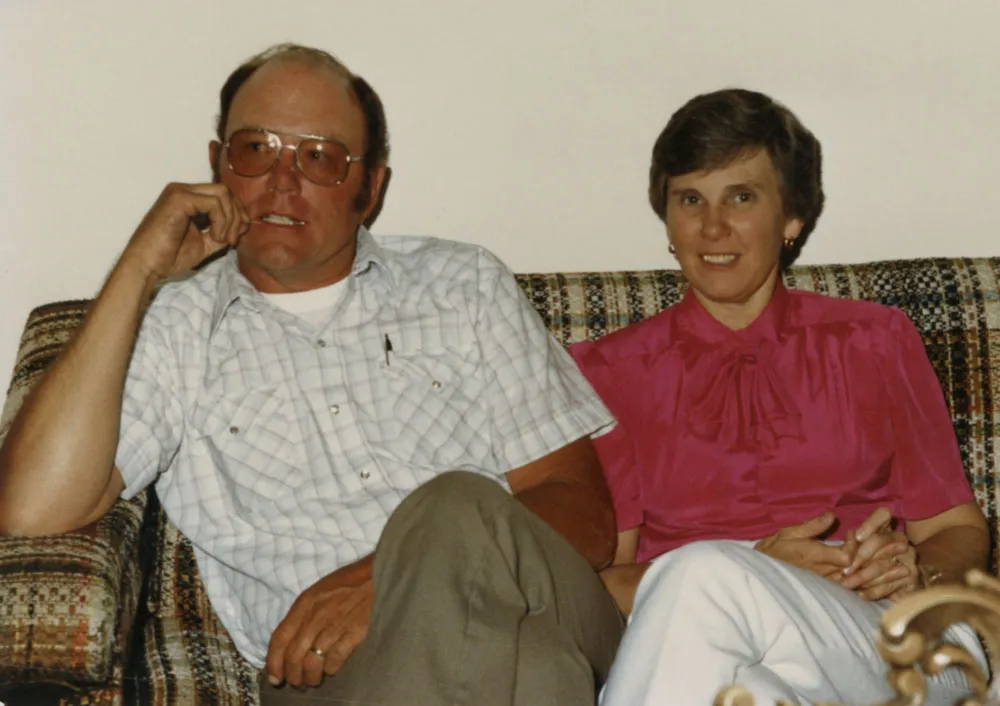
This legendary couple has been married for over 60 years. They celebrated their 60th anniversary by touring national parks in the west, sharing their love of land and nature. They met as children in Paso Robles, both raised in families that had been farming the land for generations. They fell in love at Paso Roble High School and married in 1959. They raised four children: Allen, Cindy, Denise, and Keith. Trinity Lutheran Church was their church home for many years. They were the founders of Trinity Lutheran School. Their two oldest children, Allen and Cindy, attended Concordia College in Portland, Oregon. Allen went on to seminary and became a pastor. He served Lutheran Churches in Michigan and Illinois. Their daughter Denise resides in the Northwest and works at Pacific University. Keith lives in San Luis Obispo and works in the high tech field.

Cindy Steinbeck — The Fifth Generation
Cindy Steinbeck has been the driving force behind marketing the Steinbeck Vineyards and opening the Steinbeck Winery. She is the President and CEO of the family vineyard and wine business. Cindy grew up on the ranch but after high school pursued college to further her religious studies. Cindy received her undergraduate degree in family life ministry from Concordia University in Portland. She earned a Master of Arts in History and Theology from Concordia University in Irvine, California, and worked in churches in the Northwest and in Southern California. Cindy has established a strong spiritual bond with the vineyards. Cindy is a national public speaker and has also lectured extensively on her vineyard and her faith. Cindy developed a series of talks which relate the vineyard to her life with Christ. She brings the tools used in the vineyard and the farming techniques to relate them to the scriptures. To quote Cindy, “We live in the mercy of God, and we live in our callings, and it looks different for every single person. I have found mine, presenting truths of the scriptures, and then running the family business through those eyes.” Cindy’s career developed her skills as an educator. She applied those skills to the family business, first creating tours of the vineyards and the historic ranch. She wanted people to understand the farmers’ relationship to the land and the importance of sustainable farming and life. Cindy is the family historian, collecting photographs, memoirs, recollections, and letters of the family members who settled in the Geneseo District east of Paso Robles in the 1880s. As she studied these documents and worked with her parents on writing their memoirs, Cindy learned about the strong cultural, religious, and work-ethic bonds that have been passed down from generation to generation. To move forward, one needs to know one’s roots. Cindy has watched her father transition gracefully and confidently from farming grain and cattle to growing grapes, a crop new to him, and to the area east of Paso Robles in the 1970s. This history gave Cindy the opportunity to share the challenges and the beauty of the vineyards with the public. Her religious studies enriched her philosophy by sharing the Steinbeck vineyards and the importance of the grape in Christian history and traditions.
Ryan Newkirk and Stacy Newkirk Widstrand — The Sixth Generation
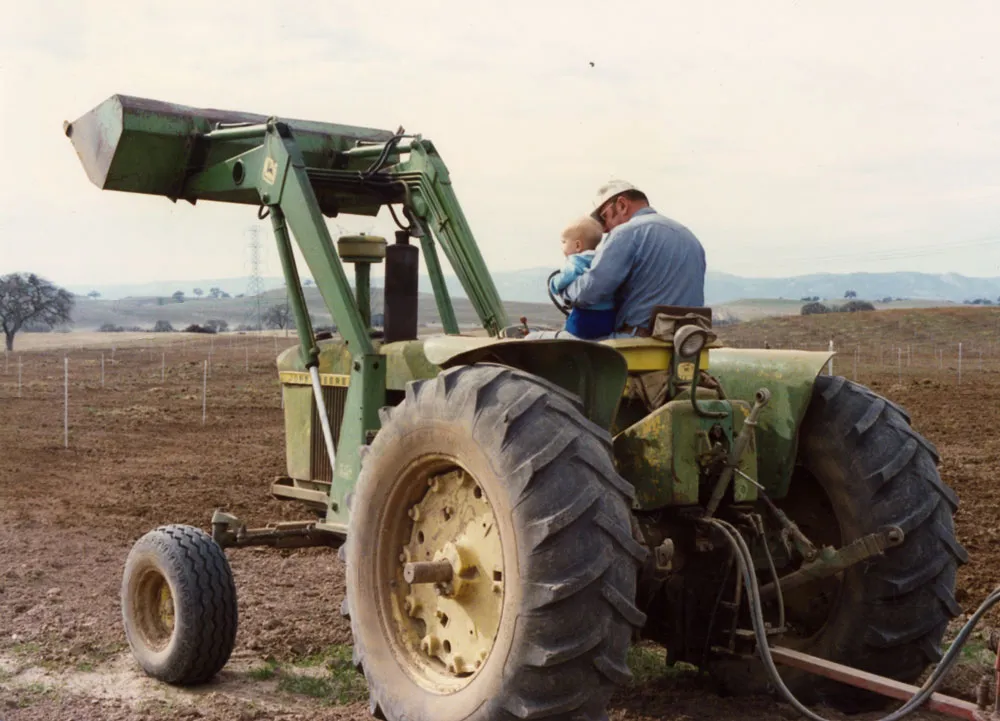
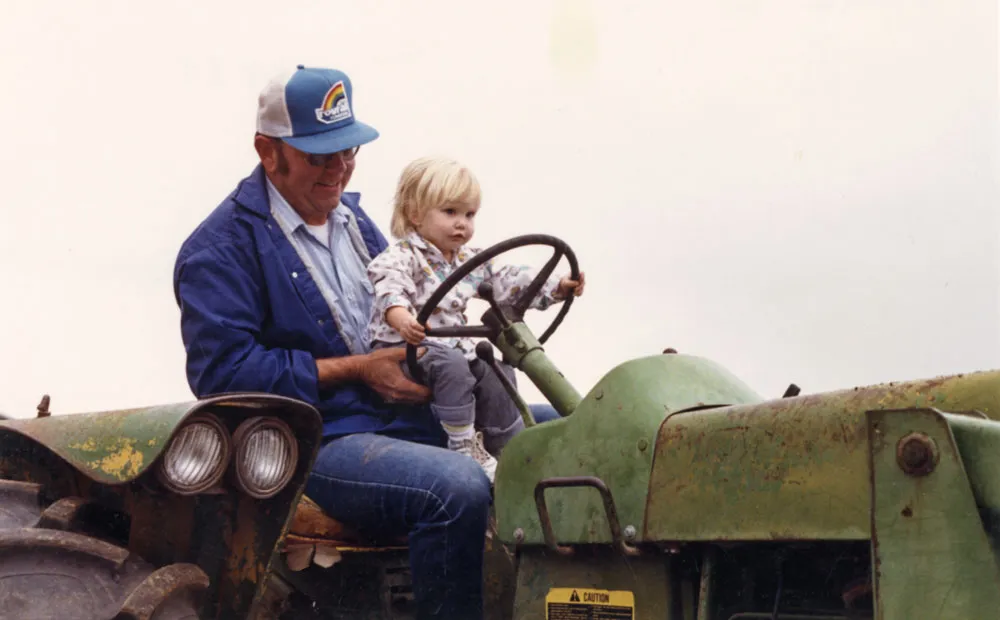
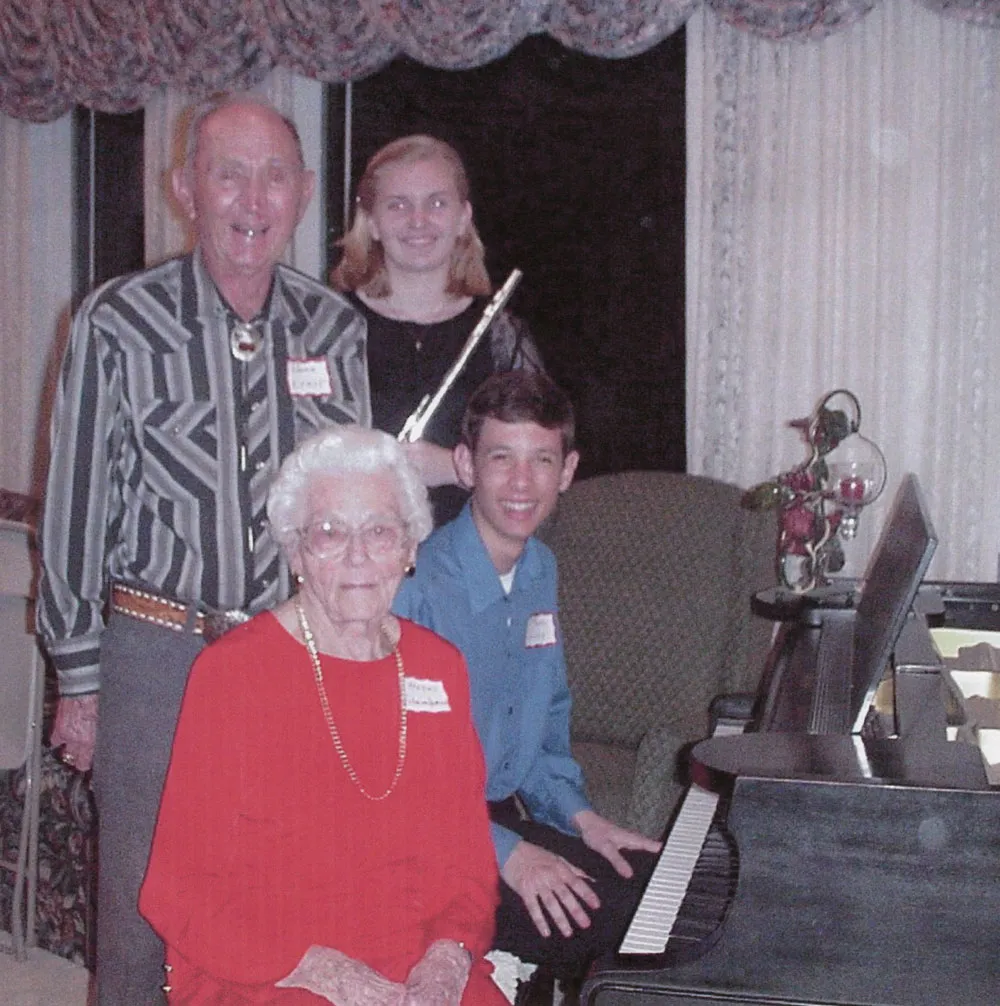
Cindy’s children, Ryan and Stacy, are the sixth generation of family farmers in the Ernst/Steinbeck line. Ryan worked with his Grandpa, Howie Steinbeck, from the time he was able to walk. The two men continue to work and hunt together. Ryan attended Cuesta College and Fresno State University where he met his wife Caitlin (Kelly). Ryan took on the management of the family vineyard and consulting businesses in 2015. Caitlin manages the bookings and visitors at the guest house. Ryan manages the Steinbeck family vineyards as well as over 900 acres of premium grapes for multiple clients through Steinbeck Farming and Consulting. Ryan is highly-respected in the wine-growing community because of his many years of experience, enhanced by the wisdom of his grandfather Howie upon which he relies. Ryan established the unique “Hunt Steinbeck” operation in 2014; he guides vineyard hunts for corporate hunters. Writers from Sports Afield, NRA Magazine, and Field and Stream have hunted with Ryan and written about the sustainable hunting program coupled with food and wine presented by the family in the vineyard. Ryan is the first to establish a pro-hunting and education program as a part of sustainable agriculture. Instead of fencing their vineyards to keep the deer out, the family allows the deer and other wildlife to graze in the vineyards. The family enjoys hunting and venison is their favorite meal. The deer population is healthy and growing in size each season. Three generations of the Steinbeck family host several corporate hunting tours for the native California coastal deer, also known as blacktail deer, on their ranch each year. Caitlin, Ryan’s wife, manages the guests and books the tours for these programs. Stacy inherited the family’s talents, skills and passion for music. She is a vocalist, pianist and flautist by training. Stacy was a drum major for Paso Robles High School Marching Band in 2004 and 2005. She earned her Bachelor of Arts. in Music with a Director of Music Certification from Concordia University in Chicago. Stacy met musician Bryan Widstrand at the University to whom she is now married. Stacy and Bryan Widstrand detoured to Paso Robles on their way to seminary. Bryan worked at a local winery and Stacy found employment with a physical therapist practice. New passions emerged for both. Stacy decided to pursue a new career and earned her Physical Therapy Assistant License. Brian decided to explore the wine industry in Tasmania, Australia. Stacy and Brian lived and worked there for four years. Brian became the head winemaker at one of the top Pinot Noir and champagne wineries in Tasmania. Stacy and Bryan have returned to Paso Robles to join the family business and raise their children with their grandmother and great-grandparent on the historic ranch. Bryan is the winemaker of Steinbeck rosé and sparkling wines; he also works in marketing and facility management. Stacy assists with online activities.
Cindy’s Grandchildren — The Seventh Generation
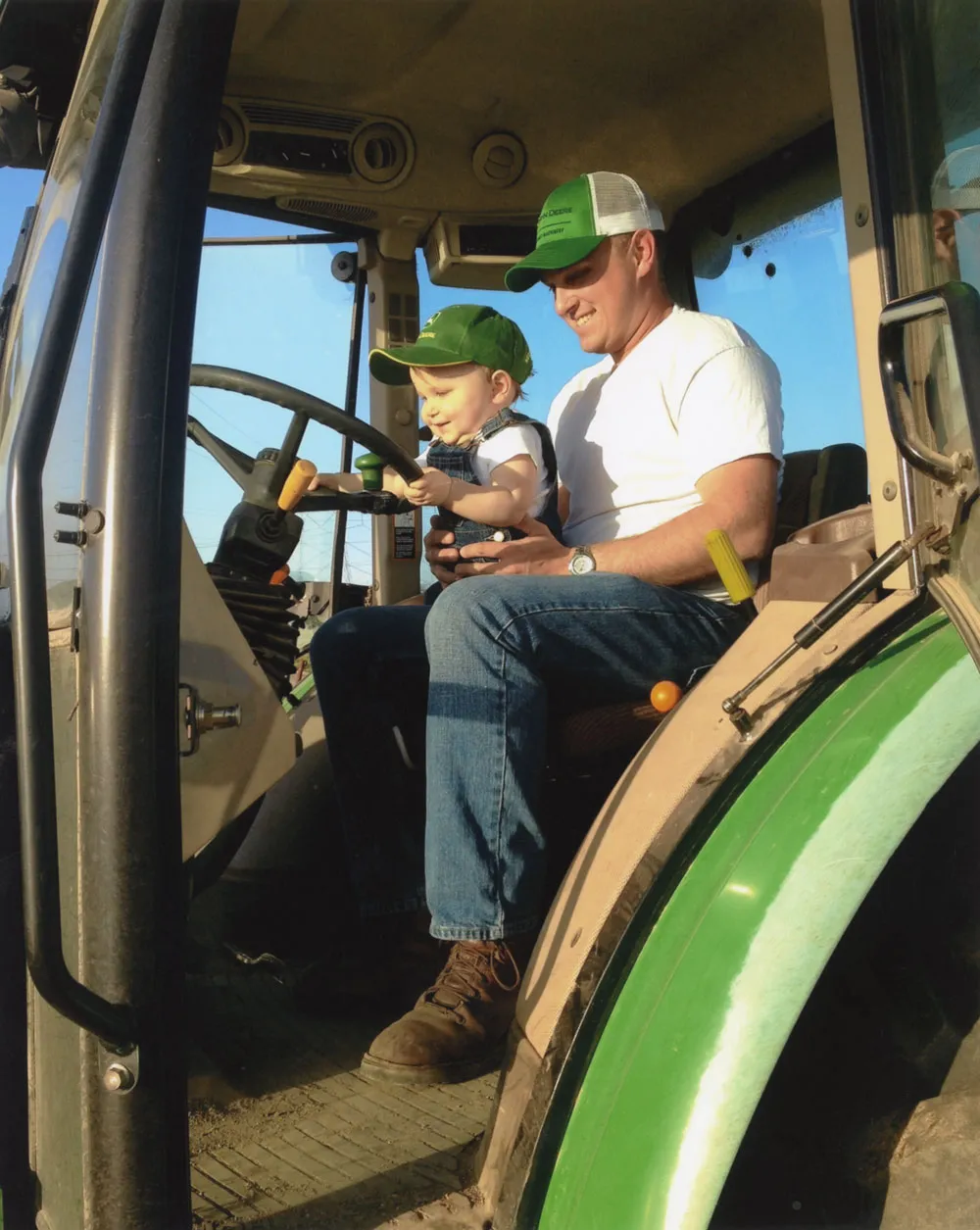
Grandma Cindy enjoys playing with the seventh generation on the ranch. They fish, drive tractor, garden, and taste the yummy grapes growing on the vines. Each child exhibits a passion for the land but only time will tell if they choose to join the family in farming or winemaking.
The Ernst and Steinbeck families have been major forces in shaping the history of farming and winemaking in San Luis Obispo County. They have farmed the major crops, grains to cattle to grapes on their ranches; they have farmed and managed wine grape vineyards for other members of the community. They have mentored many fellow farmers over the last 135 years. They have made quality and award-winning wines in the past and now in the present, spanning the 19th, 20th, and 21st Centuries. They have promoted the Paso Robles AVA as a destination for wine, tourism, and education. They have been active community members supporting their church, the Paso Robles Wine Country Alliance, the Paso Robles Chamber of Commerce, the Paso Robles Historical Society, and the Pioneer Museum. They are supporting the Wine History Project of San Luis Obispo County to archive and preserve our local wine history.
Howie began working for Western Farm Service (formerly known as Paso Robles Seed and Chemical) in 1959. By day Howie sold materials to farmers to enhance and protect their crops, advising them as to the appropriate product to use and the timing of the application. By night and weekend, Howie continued the long family tradition of grazing cattle and growing grain on the Ernst/ Steinbeck ranch. During this time Howie also served in the National Guard. Howie’s experience farming with his grandfather Frank Ernst and his uncles, coupled with a year of studying soil science, pesticides and fertilizers at Cal Polytechnic State University provided Howie with well-rounded expertise. For 32 years he worked with Western Farm Service, rising to the position of manager. Farming crops at night and on weekends has been a way of life in Paso Robles for decades.
Howie and Beverly are well known for their participation and support of local activities and charities in the Paso Robles area. Bev and Howie were members of the Trinity Lutheran Church and now attend Creston Community Church. Bev has provided the music as the part-time organist for 40 years and Howie served as a church and congregational leader. Howie and Bev also served on the building committee of the church in the planning stages of the new church building on Creston Road; Howie served as general contractor for the project. Howie and Bev are legends in the community for their Bar-B-Ques. Howie prepares the meat and bread; Bev prepares her famous potato salad and the side salads. Howie is well known for building Bar-B-Que pits and Beverly for cooking her recipes in large quantities to feed hundreds of guests. The couple built an industrial kitchen on the ranch to support community activities and fundraisers. They supported the Paso Robles High School Bearcats sporting events and hosted the annual BBQ for the Paso Robles Wine Country Alliance for 25 years. Their dedicated service to the Paso Robles Chamber included preparing food for hundreds of participants on the annual Agri-Business Tour; the 300 participants were welcomed to the Ernst/Steinbeck ranch on two different occasions. In support of many other community activities, the Steinbeck family donates gift certificates for the educational jeep tours and wine tastings to support philanthropic causes.
The History Museum in the Blacksmith Shop
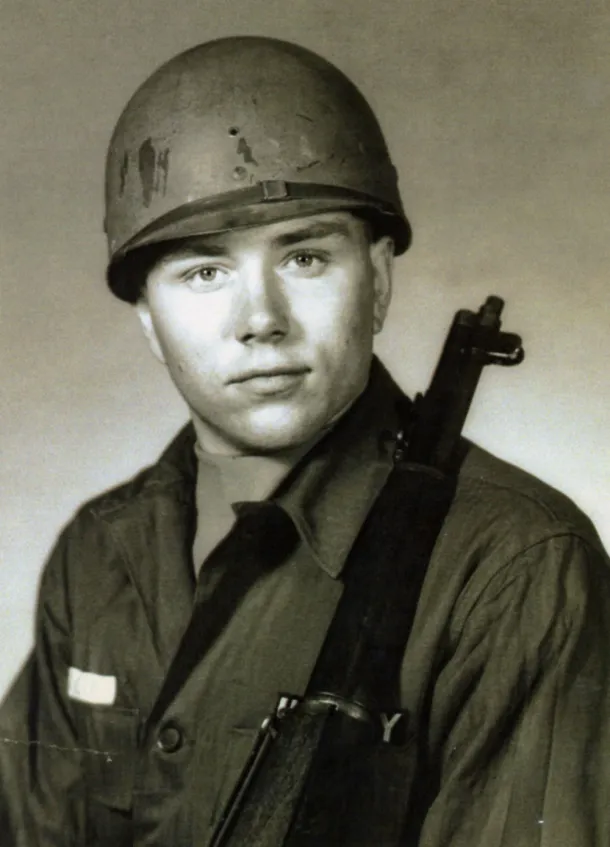
The family home, completed in 1923, and outbuildings have been restored on the Ernst/Steinbeck ranch. The historic Blacksmith Shop is now the tasting room and a museum of early family and agricultural history, including the dramatic rescue of the pilot who crashed his B-26 plane on the ranch land in 1956. The old wine press made in 1874 was used by the Ernst family in the 19th Century through the 1960s. Photos and tools highlight Ernst family members who made the first wine in the Geneseo District. There is a rich musical history in the family to celebrate: the 12-member Creston Band was formed by great uncle Will Ernst in 1888 performing all over the County before he moved to New York City. The family proudly displays a photo of Will and Ruby Ernst in Carnegie Hall with their saxophone band in the 1920s. Ryan and Stacy continue the tradition performing the music composed by Will and Ruby as well as establishing musical reputations of the own: Ryan with his voice and Stacy with her flute.
Cindy Joins the Family Business
Cindy returned to Paso Robles in 1997 to work on the ranch. Her parents were fourth-generation farmers looking for one of their four children to join them as an active partner in the family business of growing grapes. Cindy volunteered and has brought a dynamic spirit and great management skills to the historic Ernst/Steinbeck ranch. Her first years in the family business were spent on the tractor, farming in the vineyards, and working with the irrigation systems. She was named President and CEO of the family companies in 2007. Her work has since transitioned to managing all aspects of the business with a vision focusing on a very bright future.
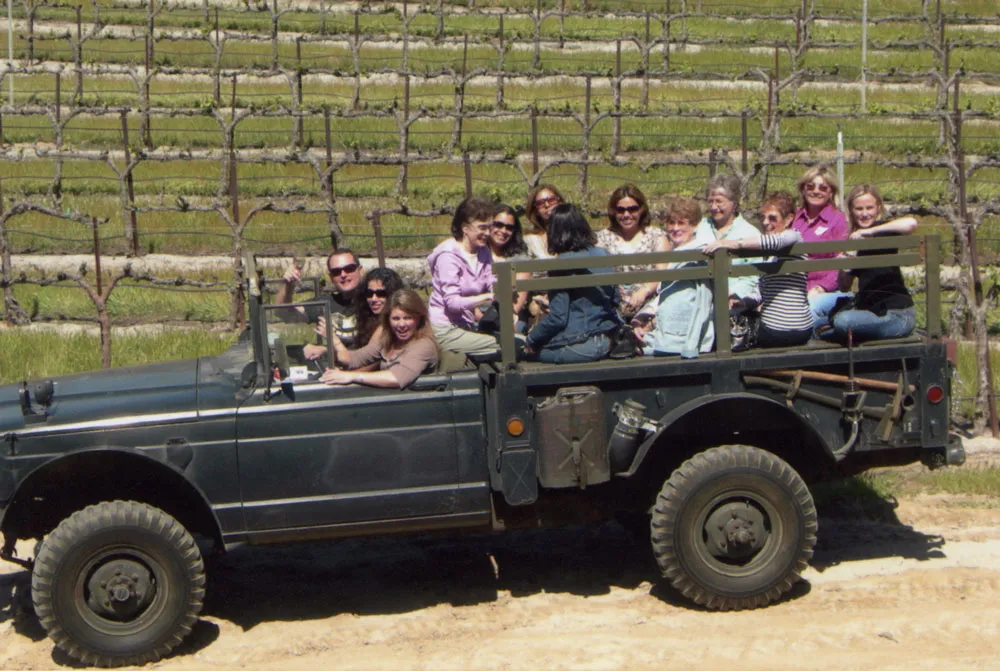
Cindy’s career in education helped her identify the need for wine education in the vineyard. Cindy, a lover of the outdoors, believes that people want to see the agriculture and vineyard grapes essential to creating fine wine. She is a person who treasures the human connection. She wants to share her knowledge with the tourist, the traveler, the wine lover, and the locals. She designed a wine and viticulture education tour called the WineYard at Steinbeck Vineyards in November of 2003. These private jeep tours of the vineyard focus on the history, planting techniques and varieties grown in the Steinbeck Vineyards. The important premise is that good wines begin in the vineyard with good sustainable agricultural practices. Cindy has assembled a collection of colorful posters showing the stages of plant development in the vineyard. The Steinbeck tool collection, which dates back to early times, is used to demonstrate the skills needed to manage the grapevines as they move from their dormant state to full grape clusters ready to harvest. The WineYard was renamed CRASH COURSES in 2009 and transitioned from the educational classroom to the tasting room. The vintage 1958 Jeep has been lovingly dubbed Wineyard Willy. A 1969 military transport Jeep 715, used at nearby Camp Pendleton was donated to the Steinbecks by a family friend. Both are used to transport visitors through the vineyard. The Steinbeck family was the first to establish a pro-hunting education program as a part of sustainable agriculture. Instead of fencing the vineyards to keep the deer out, they allow the deer and other wildlife to graze in the vineyards. The family enjoys hunting and venison is a favorite meal. The deer population is healthy and growing in size each season. Ryan heads up the hunting operation. Cindy, Bev and Howie serve as the support team to Ryan and the hunters, cooking meals, skinning deer and baking bread for them. Cindy identified the trend in Agritourism where the farmer hosts guests and shares the experience of country life on the ranch. Cindy and her family value the history of their land; the phrase, sense of place, not only identifies their home but also their multi-generational commitment to farming. The family has opened a guest house for tourists to experience the seasonal activity in the vineyards, giving Ryan’s wife Caitlin an active role in the family business.
Kathy Kelly (founder and producer of the Winery Music Awards) was introduced to Taja Sevelle, founder of Urban Farming. Urban Farming’s “Include Food” program was established in Detroit, Michigan by singer Taja Sevelle in 2005. Taja founded the organization with a pamphlet, three gardens, and $5,000 of her own funds. It has received major support from the late singer, Prince, and Atlantic Records. The mission of the organization is to end hunger in our current generation. The organization is now an international non-profit with gardens in the United States, the Caribbean, and in the United Kingdom. Kathy and Taja, working together, introduced two initiatives: the “Vineyards Growing Veggies” Pilot Program and Cal Poly’s involvement with the Urban Farming Project in Los Angeles, known as “Food Chain” which is designed and planted as an edible wall of vegetables. Kathy Kelly asked Cindy Steinbeck to participate in their pilot program by planting an acre of vegetables in the Steinbeck Vineyard. If successful, the concept of using land surrounded by grapevines to grow vegetables would dramatically increase the production of food for those in need in San Luis Obispo County. Cindy agreed immediately. Cindy Steinbeck planted a one-acre garden of tomatoes, squash, asparagus, melons, peppers, and basil, surrounded by lavender borders in the Steinbeck vineyard with the help of 30 volunteers. The Master Gardeners organization of SLO County agreed to maintain the garden. Steinbeck Vineyard was the first vineyard to participate in the pilot program, “Vineyards Growing Veggies.” Urban Farming’s mission is to end hunger in our current generation. To succeed additional food must be grown in both urban and rural areas so that it can be distributed directly to local populations. The mission is expanding worldwide; by 2011, more than 56,000 gardens across the world joined the Urban Farming Food Chain. Steinbeck Vineyard donated the irrigation water and lent the farming tools to plant and maintain the vegetable garden. The irrigation system, seeds and seedlings, compost, tools and labor were donated by a number of donors including Farm Supply Company, Greenheart Farms, Botanical Interests Seed Packets, Hometown Nursery, Home Depot, Green Acres Lavender Farm, Community Recycling, Premier Ag and Trader Joes. The Steinbeck Vineyard and Winery is the first vineyard in the United States to participate in the project as a pilot program that proved successful. The project was expected to generate six to seven tons of produce which will be distributed to local individuals and families in need in SLO County. SLO County had 35,000 people (15%) who were considered “food insecure in 2007. Volunteers tended and distributed the crops to local nonprofits such as the San Luis Obispo Food Bank who distributed the food to those in need.
Cindy actively participates in politics in San Luis Obispo County. The very complex issues surrounding water and water use in the State of California are her focus. She educates the community about constitutional water rights in California and the necessity of rural landowners to protect their rights. Cindy and over 1,000 landowners filed a “Quiet Title: lawsuit in 2013 to protect their rights and the precious groundwater resources; of great concern is the attempt of others to control and sell water out of the area through the practice known as “groundwater banking.” The litigation continues.
The Founding of Steinbeck Vineyards and Eberle Winery
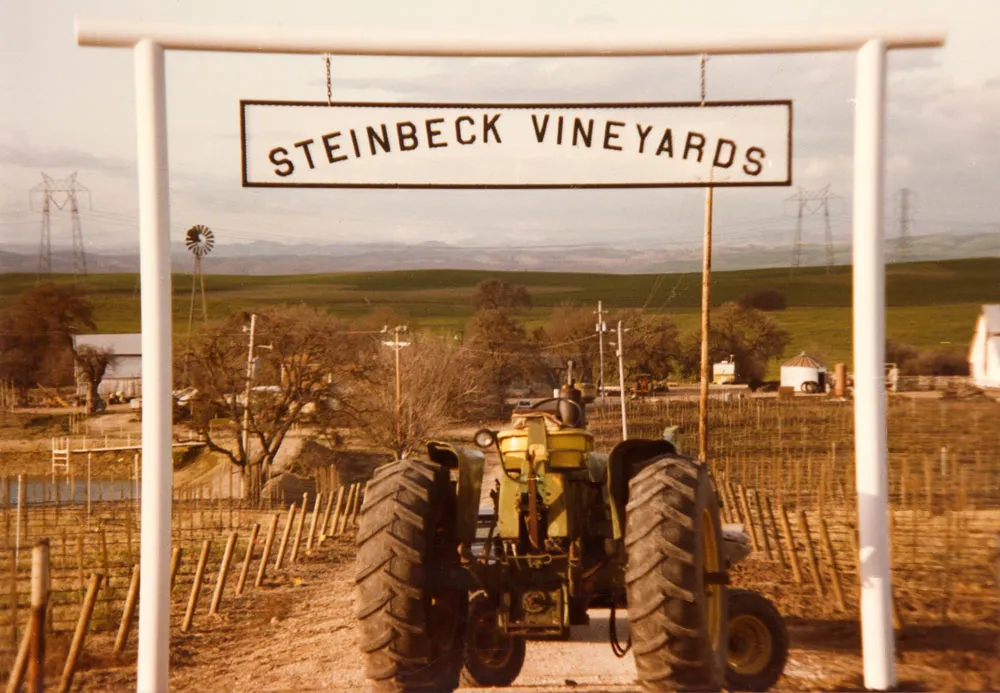
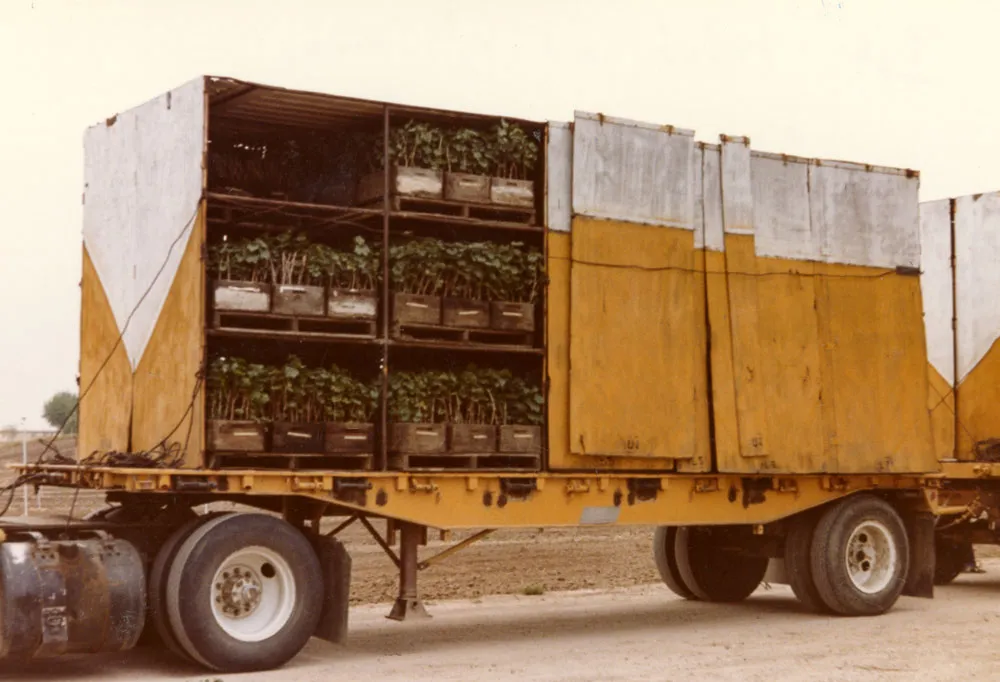
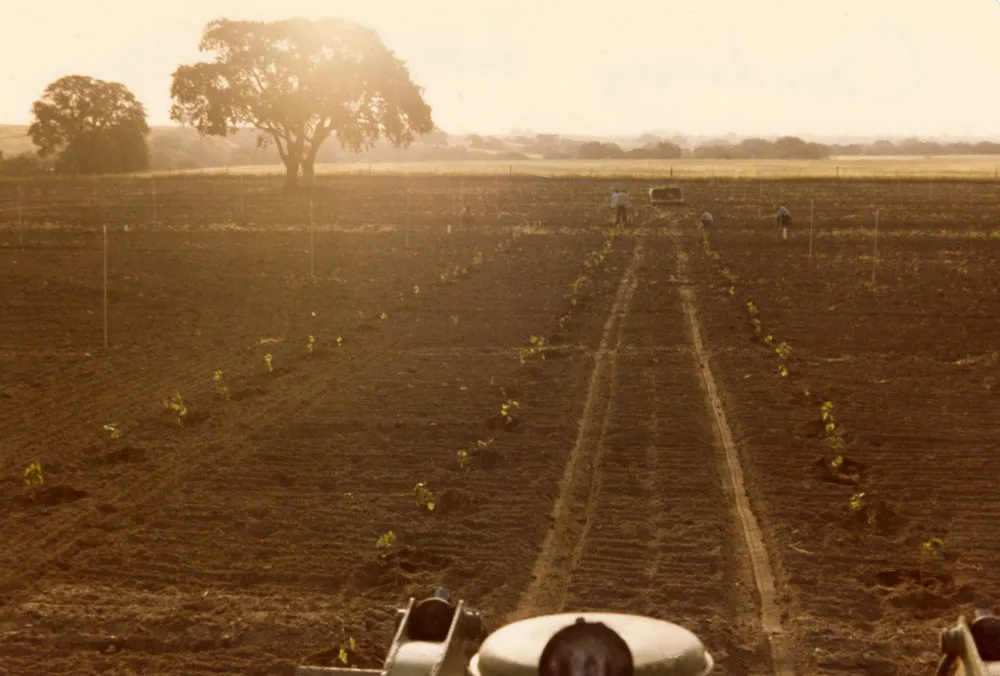
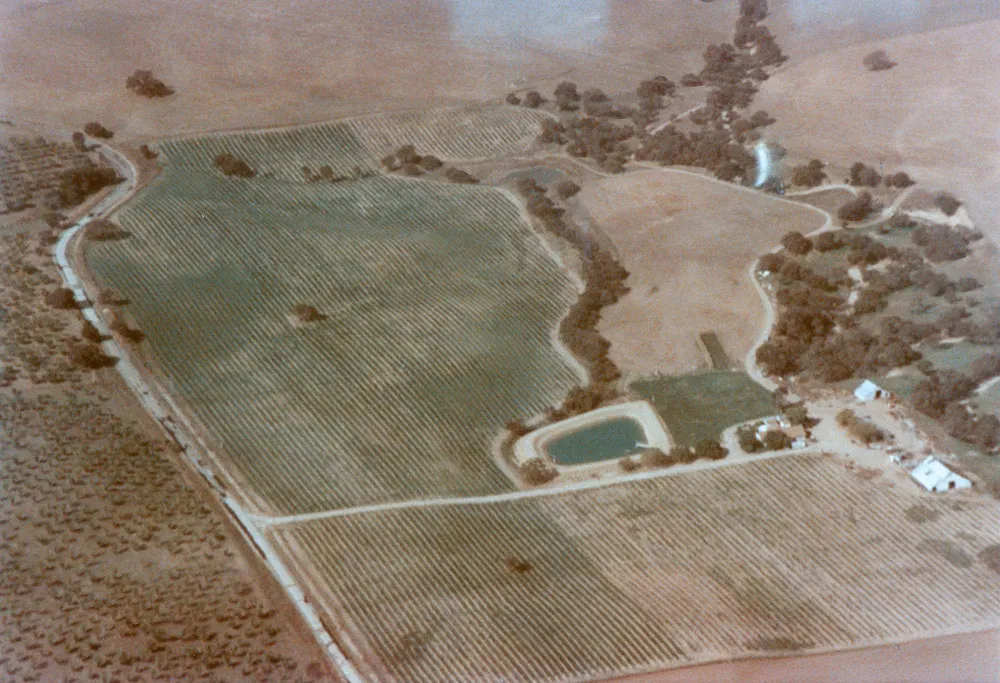
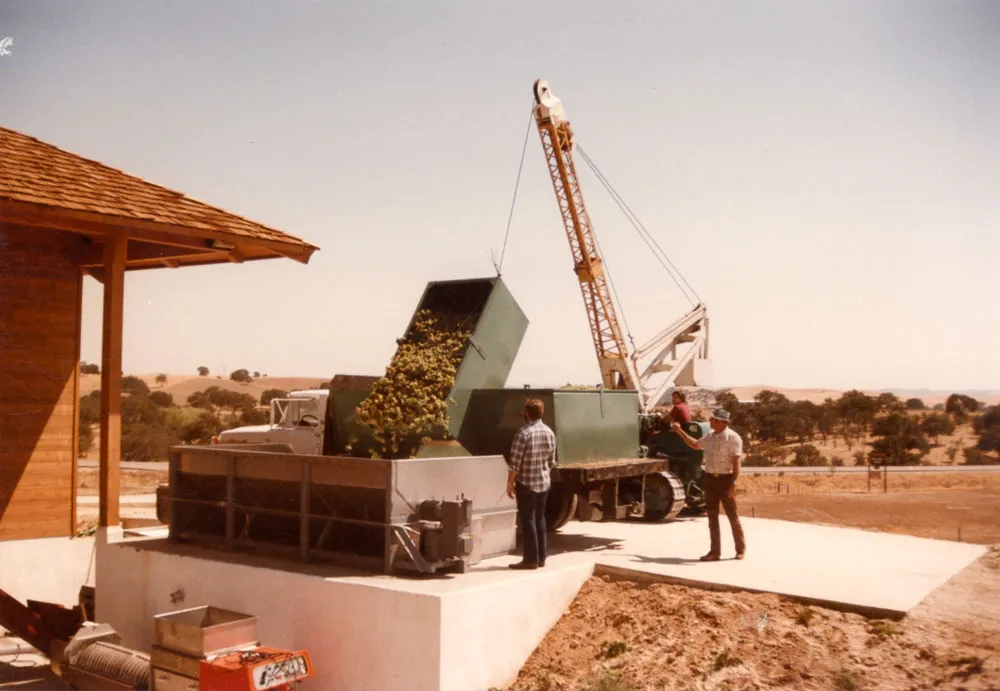
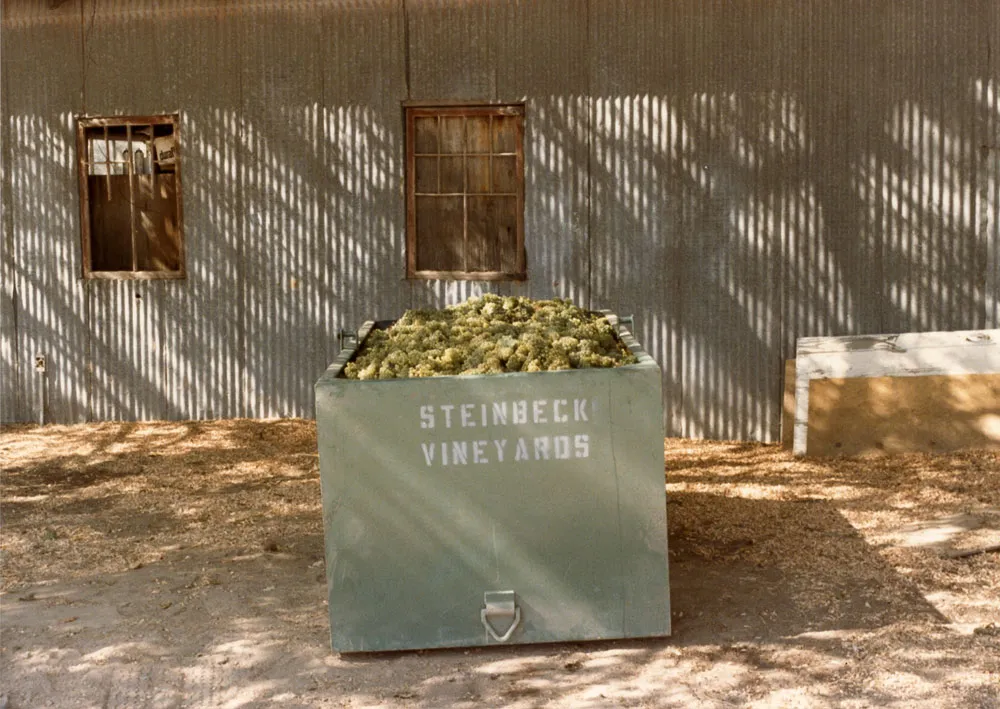
Howie’s work at Western Farm Services for 33 years led to a relationship with Gary Eberle. The two men met in 1973 when Gary joined his half-brothers as co-owner and winemaker at Estrella River Winery. Howie and Gary worked together growing the grapes in the Estrella River Vineyard; Howie served as advisor while Gary took care of the day-to-day operations. Gary Eberle had a dream of founding his own winery to produce fine wines in limited quantities. At the same time, Howie dreamed of establishing his own vineyards to grow premium Chardonnay, Cabernet Sauvignon, and Syrah. They arranged a meeting, each man with his own private aspirations, and left as partners. Gary resigned from the family partnership at Estrella River and established Eberle Winery in 1979. Howie became a partner in Eberle Winery, planted the grapes in his own vineyards, and took on the vineyard management of the fruit grown at Eberle Winery. The Steinbeck vineyards were planted in 1982. The first vineyards east of Paso Robles in the 1970s were large commercial vineyards covering hundreds of acres. These grapes were farmed for wineries in Napa, Sonoma, and Los Angeles. At the time, local farmers were skeptical about the transition from farming grains and almonds to growing grapes. However, during the late 1970s, Howie Steinbeck recognized that the demand for premium grapes would escalate as the California Wine Revolution firmly established. Howie planted a 50-acre vineyard with one of the new classic varieties, Cabernet Sauvignon, on its own rootstock which has become the flagship grape of the Steinbeck Vineyard. The cuttings were taken from Estrella River vineyards. The second classic, Chardonnay, was also planted at the same time. George Steinbeck, Howie’s father, drove tractor during the planting of the Vineyard. The first harvest was in 1985. In 1985 Howie planted 65 more acres with a range of grape varieties. Zinfandel was planted in 1987. These cuttings were obtained from Richard Sauret. Additional vineyards were planted in the 1980s and 1990s, bringing the total acreage to 350 acres of premium grapes. Syrah was planted in 1993 with cuttings first purchased and planted at Estrella River Winery. The clone was grown at UC Davis, obtained by Gary Eberle and propagated for the Estrella River vineyards by Doug Mead. Howie has the largest and one of the oldest Syrah vineyards in California. Barbera was planted in 1995, Petite Sirah in 1998, and the Rhone varietals in the first decade of the 21st Century. Howie is known for the excellent fruit he produces. Gary Eberle purchases Cabernet Sauvignon, Barbera, Syrah, Zinfandel, Petite Sirah, Roussanne, and Viognier from Steinbeck Vineyards. Howie supplies grapes to acclaimed wineries such as Justin, and J. Lohr in Paso Robles and Baileyana owned by the Nevin family in the Edna Valley. Howie Steinbeck helped two Paso Robles Wineries open their doors: Eberle Wineries and the original Eagle Castle Winery which has since been sold. Howie has been asked repeatedly, “why didn’t you establish your own winery?” His simple and direct answer: “Because I just like to grow things.” He is proud that his daughter chose to establish a winery sporting the family name. He takes great delight in meeting new friends, telling stories, and taking people on jeep rides through his beloved vineyards. Over 98% of the grapes grown by Howie Steinbeck are sold to other winemakers; just over 1% are used for the family label.
Establishing the Steinbeck Winery
As her agri-business operation gained notoriety, Cindy felt the frustration of not being able to share family wines produced from the fruit grown in the Steinbeck Vineyards with those visitors touring the Ernst/Steinbeck ranch. She approached her parents with her idea of establishing the Steinbeck label and the decision was made to start producing their own wines. The winery was established as a separate entity. Plans for the winery and the tasting room soon evolved. Cindy had to find the perfect winemaker for Steinbeck Vineyards. She wanted to produce elegant full-bodied wines with lower alcohol content than had been characteristic of Paso Robles wines. Cindy approached Steve Glossner who won the coveted international award, the Pichon Longueville Comtesse de Lalande Trophy for best blended red wine, the 1994 Isosceles Wine he crafted for Justin Winery in Paso Robles. Steve Glossner has studied wines from all over the world and is known for his amazing palate. Steve’s style of winemaking produces smooth, silky, elegant wines. Steve was attracted by the history of the vineyard and the family’s commitment to growing top quality grapes. Steve has worked as a winemaker at Halter Ranch, Adelaida, and Justin Wineries. Cindy has chosen four varieties for her wines: Cabernet Sauvignon, Petite Sirah, Zinfandel, and Viognier. Each variety is harvested from a small designated section of the vineyard. Approximately five acres, which is only 1% of the vineyard, are designated for the Steinbeck label. The first vintages were 2005 Cabernet Sauvignon and the 2006 Viognier. Steve Glossner used the Paso Robles Wine Services as his production facility. The family built a modern processing facility in 2017.
Wine Industry Persons of the Year — 2006
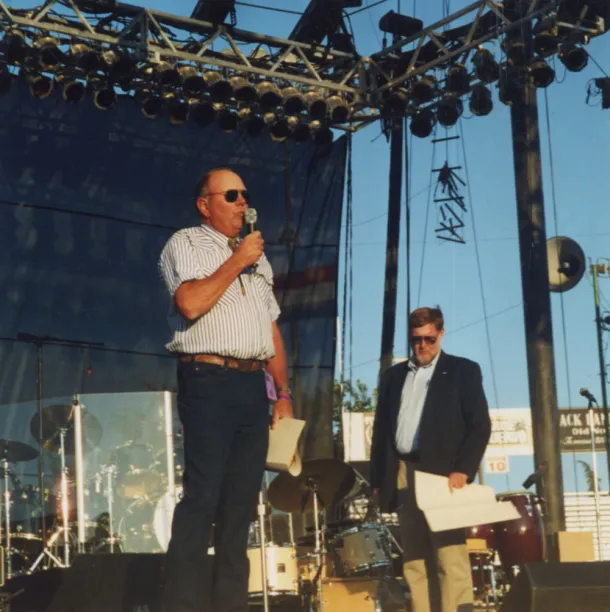
By 2006 Steinbeck Vineyards was selling their premium grapes, grown on 300 acres to wineries all over California. Howie also farmed or managed over 1000 acres in Paso Robles for wineries who wanted his hand in growing premium grapes for their wines. In 2006 Howie and Bev Steinbeck were named as Wine Industry Person of the Year at the California Mid-State Fair. They were presented with the award at the Paso Robles Park Ballroom during the Wine Country Alliances’ 15th Gala which was attended by more than 180 industry leaders, local and regional dignitaries. Dana Merrill, vice-chair of the Wine Country Alliance presented the award with these words, “Howie and Bev Steinbeck are true pioneers of the Paso Robles Wine Industry and have contributed heart and soul to an industry that is bearing the fruits of their labor. I am proud to present this award to two deserving people who are always ready to lend a hand to this industry. It is appropriate that they are well recognized for their contributions.” Bev and Howie were only the second couple to receive the award in the last 15 years. To quote Bev, “The best thing was that so many people came up and hugged us. We’d always cared about them, but we didn’t know how much they cared about us.” Howie described himself as a “bit humbled.” Gary Eberle describes Howie and Bev as “salt of the earth.” Tom Myers, winemaker at Estrella River Winery and Castoro Cellars, has this to say: “Howie Steinbeck is one of the first people I became acquainted with upon arriving in the area. At the time he was a sales representative for the local major vendor of agricultural products. He was an extremely helpful and conscientious advisor to the vineyard operations at Estrella River Winery, advising on fertilization and pest management. I have had various opportunities to witness Howie’s viticulture, by walking his vineyard and making wine from his grapes. I can attest to the high quality of both white and red grapes grown in the Steinbeck vineyards. Attention to detail and a passion for quality are an outgrowth of his true love of the land and his love of viticulture. The wines made from his grapes are always shining representatives of the Paso Robles AVA. I could count on grapes arriving in the best of condition and matching the parameters desired. A contract was never required for a transaction with Howie, a handshake was always honored and preferred. He typically wanted feedback and any suggestions that could lead to improvement. Howie is truly an indefatigable individual. Over the years he has served on the boards of various wine industry organizations and volunteered for many activities to promote the area’s wine country reputation.” Howie and Bev Steinbeck continue to grow premium grapes and participate in the Paso Robles community. Their children, grandchildren, and great-grandchildren continue the Steinbeck and Ernst legacies into the 21st Century, shaping wine history and maintaining a historic vineyard.
Seven generations. One estate. Paso Robles in a glass.
From our family vineyard to your table—Paso heritage, beautifully poured.
Plan Your Tasting
$20 / person-
Open Daily — Tastings 10:00am – 4:00pm
-
Indoor & outdoor seating options available
-
Large groups accepted with reservation
-
$20.00 per person tasting fee
Call or email your desired time and date and we’ll get back to you promptly.