Steinbeck Vineyards & Winery
Our Heritage Timeline
1 Family – 7 Generations – 142 Years
Our Heritage Timeline
Seven generations of stewardship, innovation, and Paso Robles winegrowing.
1840s
William and John Ernst—twin sons—are born to Catherina and John Jacob Ernst in Germany.
1860s
Catherina and John Jacob Ernst arrive in America from Germany and settle in Geneseo, Illinois.
1880s
William Ernst visits California.
Inspired by news of prime farmland and a call to German Lutheran families, William travels to San Luis Obispo County, purchases land ~12 miles east of Paso Robles, and prepares a homestead.
The William Ernst family moves to the Geneseo District on Christmas Eve.
John Ernst sells family farms in Geneseo, Illinois. The John Ernst family moves to Creston, San Luis Obispo County, in the fall.
John Ernst petitions to establish the Geneseo School District.
Geneseo Schoolhouse is completed. That same year, 12-year-old Will Ernst organizes the Creston Band, performing countywide.
William Ernst supports the UC Agriculture Experiment Station with labor, funds, and crop trials.
1890s
Severe drought in the Creston area forces families to relocate; the Creston Band disbands.
1900s
William and John Ernst form the Ernst Brothers wine label and exhibit at the fair. Each produces 1,500 gallons of wine.
William compiles orchard and vineyard research for the UC Agriculture Experiment Project, published in its final report.
Will Ernst studies at Oberlin and the Dana School of Music; later helps pioneer LA’s jazz movement (Majestic & Superba Theatres).
Frank Ernst marries Rosetta (Rosie). In November, Harold “Howie” Ernst is born.
George Steinbeck is born in Oakland, California.
1910s
William Ernst passes in Geneseo. Hazel Wilhelmina Ernst is born to Frank and Rosetta.
Composer Will Ernst is hired to organize the Paso Robles City Band.
Will directs the band at the Paso Robles Hot Springs Hotel and the orchestra at the San Luis Obispo Theatre.
Will Ernest marries Ruby and moves to the San Pedro–Wilmington area; he forms his own orchestra.
1920s
Frank Ernst purchases a Yuba tractor—ushering in local mechanization.
Frank & Rosetta purchase the 300-acre ranch (now 5940 Union Road, Paso Robles). Will & Ruby found the Ernst School of Music & Saxophone Conservatory in NYC and author Improvising and Filling In (Irving Berlin).
Frank & Rosetta complete the ranch house and raise five children there; Hazel is their only daughter.
Henrietta is performed at Carnegie Hall (May 3). Frank pioneers selling grain in five-ton boxes; Hazel graduates PRHS and attends Cal Poly (among the first women).
1930s
Hazel is chosen Pioneer Day Belle Attendant (age 21).
Ruby Ernst passes. George Steinbeck graduates from the Seminary (St. Louis) and serves in Seattle.
Horses & mules are sold to fund a Cat 35 diesel—still operating in 1967. On July 14, Hazel marries Rev. George L. Steinbeck and moves to Santa Barbara.
Son Arnold is born (1936). Jespersen brothers start farming/dairy (1936). Howie is born (Oct 29, 1938). Francis Jespersen marries Edna Mae (1939). Bev Jespersen is born (1940).
1940s
Pastor George serves as U.S. Army chaplain (104th Inf. Div.). Hazel and the children stay on the William Ernst ranch during WWII. George is discharged Nov 3, 1945 and returns to ministry in Paso Robles.
Ernst Brothers farm 7,800 acres (2,500 grain). George directs the SoCal Lutheran Radio Hour (from 1946). Frank Ernst dies (1948); family returns to the ranch. Howie farms barley at 10; a 29-bin grain elevator is added (1949).
1950s
At 12, Howie drives his first harvester. Will Ernst passes (1951). Paso Seed Co. is founded (1952). Howie farms barley on the original 50-acre parcel and learns to fish at Willow Creek.
A B-26 Marauder crashes ~200 feet from the home; crew survives by parachute. The site is marked by an American flag and later inspires the red blend “The Crash.” Howie graduates PRHS (Bearcats).
Howie studies at Cal Poly (pest mgmt., fertilizers, soils). George & Hazel pastor in Newman and Terra Bella. Bev is Pioneer Day Belle (1957) and graduates (1958). Howie starts at Paso Seed & Chemical; Howie & Bev marry (1959) and move to the ranch.
1960s
Jespersen Brothers relocate to Klamath Falls, OR (1966). George becomes first full-time chaplain for Good Shepherd Lutheran Home of the West (1968).
1970s
Howie & Bev buy the ranch (title transfers late ’70s). Howie meets Gary Eberle (1973). George has a near-fatal auto accident (1973) and retires (1974). George & Hazel return and build a home (1975).
Howie shifts from grain to grapes and partners with Gary Eberle: “I’ll build the winery; you grow the grapes.”
1980s
Cindy marries Tim (1982). First 50 acres planted (Cabernet & Chardonnay). Paso Robles AVA and the Vintners & Growers Association are established (1983). First Steinbeck fruit harvested (1984), surplus sold to Gallo. Six tons from five acres (1985). Ryan (1985) and Stacy (1987) are born.
More acres planted at home and at Eberle (Cabernet, Chardonnay, Muscat Canelli). George & Hazel move to Solvang Lutheran Home. Berto Espinoza (future foreman) arrives (1988). Another 30 acres planted (1989).
1990s
Howie retires from Western Farm Services (1990); farming 116 vineyard acres and advising growers. Syrah planted with Estrella clone (1991)—now among California’s oldest plantings. Founding members of PRWCA (1993). “Roblans of the Month” (Aug 1994).
150 acres planted for Robert Hall (1996). Family offers shares to children; Cindy joins. Cindy returns to the ranch (1997) with Tim. Bev & Howie build their hilltop home (1999).
2000s
Cindy earns an M.A. (Concordia–Irvine), brings education & sustainability focus (John 15). Creates the “little schoolhouse,” launches WineYard classes and Crash Courses in “WineYard Willy” (1958 Jeep).
Steinbeck Winery founded (2005); Steve Glossner hired. Label debuts with 2005 Cabernet & 2006 Viognier. Howie & Bev named Wine Industry Persons of the Year (2006). Ryan joins; Cindy serves on PRWCA board; Howie manages ~1,000 acres (2007). Cindy joins “Vineyards Growing Veggies” with Urban Farming.
Cindy presents sustainability seminars; Hazel passes (Sept 21, 2007). One-acre garden planted (2008). Stacy marries Bryan Widstrand (2008). Vineyards & Tasting Room welcome first guests (Dec 2009).
2010s
Cindy takes the Steinbeck name. 2007 Petite Sirah earns “Best in Show” (Piedmont Post, Aug 11, 2011). Foreman Berto profiled in the Tribune (2013). “Quiet Title” lawsuit filed (2013). Ryan launches Hunt Steinbeck (2014).
Ryan becomes vineyard manager (2015). Bryan Widstrand heads to Pipers Brook (Tasmania); Stacy works in Tasmanian wine industry. Agritourism guest house launches. Sports Afield feature (2016). Vineyard grows to 300 Acres over 13 varieties; 6,500 sq-ft winery opens (2017)—~1,250 cases under Steinbeck label; 99% of fruit sold to producers incl. Eberle, J. Lohr, Justin. Stacy & Bryan return (2018); Bryan becomes winemaker apprentice & sales director.
Stacy & Bryan perform “Henrietta,” a saxophone solo by William (Will) A. Ernst.
Merlot joins the Steinbeck label (2018). Sparkling wine (Chardonnay, Syrah, Zinfandel) celebrates the ranch’s centennial (2019).
2020s
The family celebrates 100 years on the Ernst/Steinbeck ranch and a century of sustainable farming.
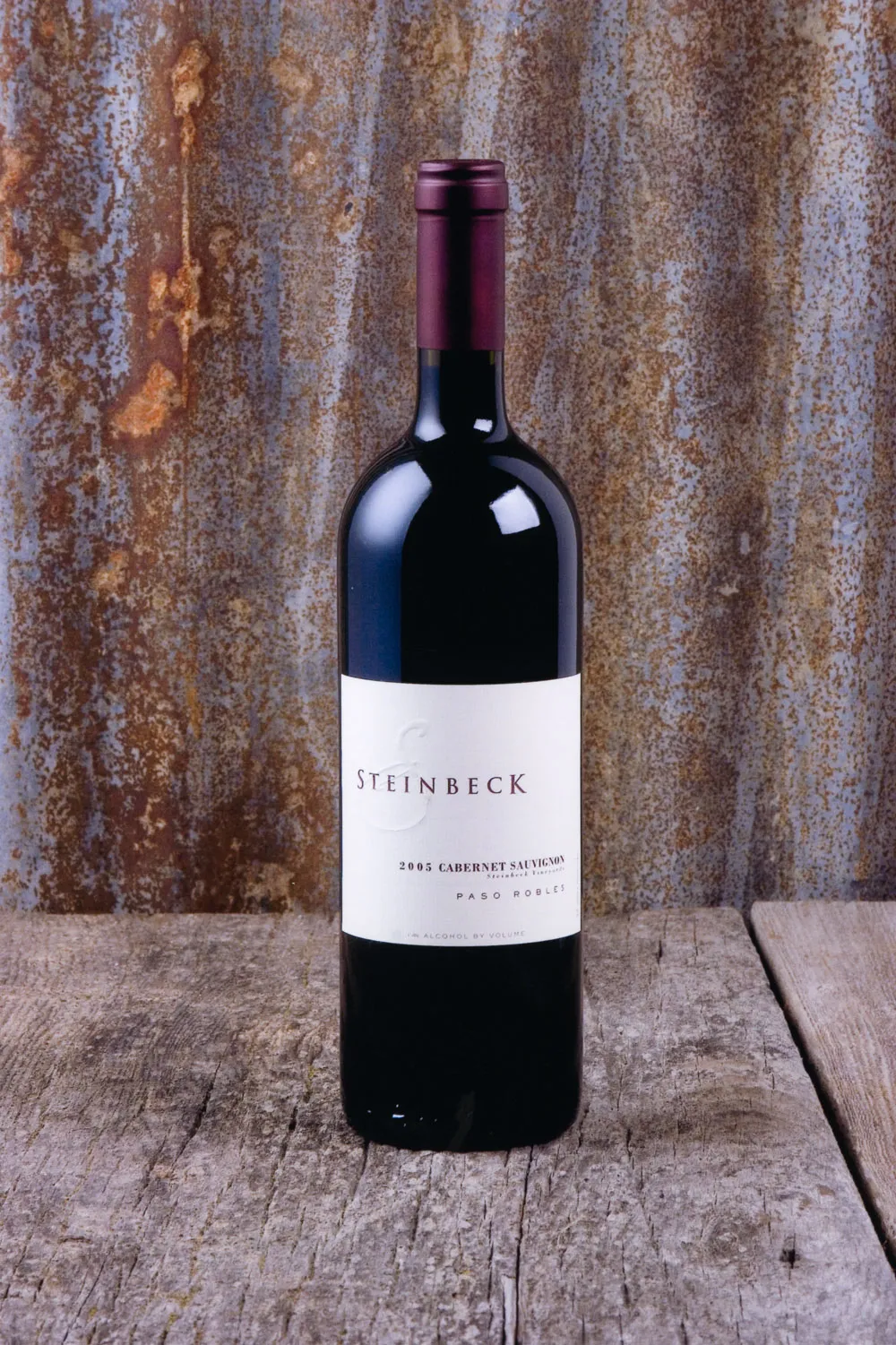
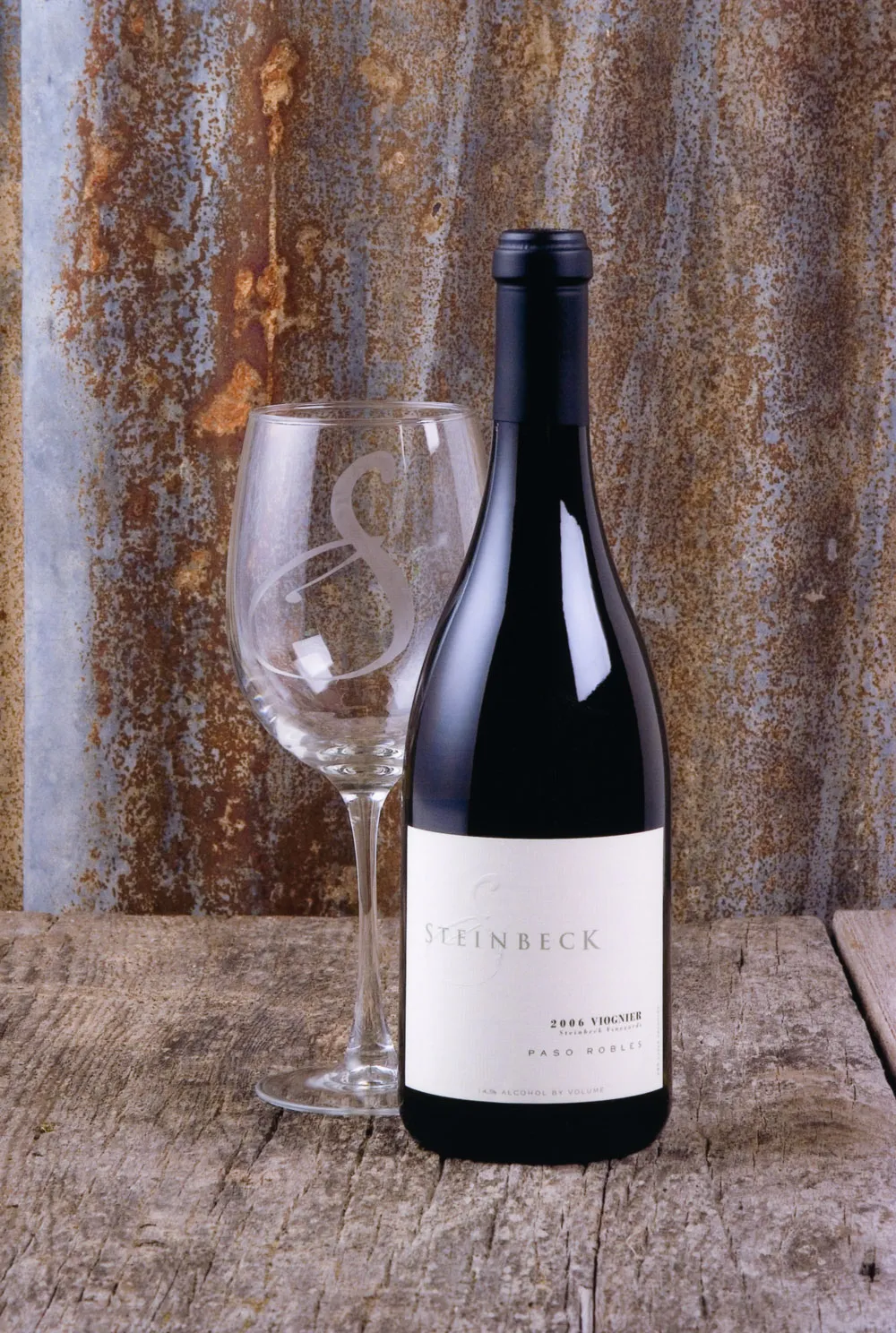
Seven generations. One estate. Paso Robles in a glass.
From our family vineyard to your table—Paso heritage, beautifully poured.
Plan Your Tasting
$20 / person-
Open Daily — Tastings 10:00am – 4:00pm
-
Indoor & outdoor seating options available
-
Large groups accepted with reservation
-
$20.00 per person tasting fee
Call or email your desired time and date and we’ll get back to you promptly.